

Detection Target
Analysis of Pharmaceutical Ingredients
Overview
The pharmaceutical and chemical industries involve a wide variety of raw materials (excipients) and finished products, and the production processes are complex and diverse. Many drugs have complex chemical structures or exhibit only minor chemical differences, making conventional identification methods such as color reactions, precipitation, crystal formation, or UV-VIS spectroscopy often insufficient for differentiation. The HKL-FTIR Spectrometer for Pharmaceutical and Chemical Testing, however, possesses high specificity and is widely used in the qualitative analysis of organic compounds in the pharmaceutical and chemical fields. In drug testing, infrared spectroscopy is often used in combination with other physicochemical methods as an important identification method for organic drugs. Infrared spectroscopy utilizes the selective absorption of electromagnetic radiation in the infrared region to determine the molecular structure of a substance. Therefore, the HKL-FTIR Spectrometer for Pharmaceutical and Chemical Testing can effectively meet the requirements for qualitative identification of compounds.
Principle
Pharmaceutical and Chemical Industry: Raw materials (excipients) and finished products in this sector exhibit a wide variety and involve complex production processes. Many drug compounds possess intricate chemical structures or minimal inter-molecular differences, making them difficult to distinguish using conventional methods such as color reactions, precipitation, crystal formation, or UV-VIS spectroscopy. Infrared (IR) spectroscopy, however, offers high specificity and is widely applied for qualitative analysis of organic compounds. In pharmaceutical testing, IR spectroscopy is often used in combination with other physicochemical methods, serving as a critical technique for the identification of organic drug substances.
Operating Conditions
Apparatus and Accessories
1) HKL-FTIR Spectrometer for Pharmaceutical and Chemical Testing
2) Solid Sample Testing Accessories
① Tablet Press
② Tablet Die set
③ Agate Mortar (φ=60 mm)
④ Infrared Drying Oven (temperature controllable)
⑤ Potassium Bromide (KBr, spectroscopic grade)
3) Liquid Sample Testing Accessories
① Fixed Liquid Cell (φ=32 mm)
② Demountable Liquid Cell (φ=25 mm)
4) ATR accessory
① ZnSe crystal, 45° incidence angle
Test conditions
1) Resolution: 4 cm-1
2) Scan times: 32
3) Detector: Pyroelectric Infrared Detector
Sample Preparation
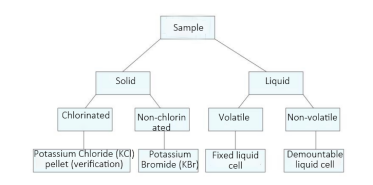 |
Figure 1 Sample Preparation Workflow Diagram |
Tablet Method: Thoroughly mix and grind the dried sample with potassium bromide (KBr) at a ratio of approximately 1:200. For samples containing chlorine, verify consistency by comparing spectra obtained using potassium chloride (KCl) before proceeding with KBr. Transfer an appropriate amount of the mixture into a tablet die and compress using a hydraulic press to form a transparent tablet for analysis.
Liquid Film Method: For volatile liquid samples (e.g., ethanol), draw an appropriate amount using a glass syringe and inject it into a fixed liquid cell (ensuring no bubbles in the center of the window). For non-volatile samples (e.g., glycerol), use a capillary tube to drop an appropriate amount onto the center of a potassium bromide (KBr) window, then cover it with another KBr window and rotate to form a film. Fix the two windows in place before measurement.
ATR Method
Take an appropriate amount of the sample and press it firmly onto the ATR accessory crystal (ZnSe) to directly collect the infrared spectrum in reflection mode.
The ATR method can be used for both solid and liquid samples without requiring sample preparation, enabling rapid analysis of multiple samples within a short time. The obtained spectra can be ATR-corrected and compared with reference spectra. When applied to pharmaceutical packaging materials, the ATR method eliminates the need for sample preparation and allows for in-situ testing, demonstrating significant advantages—particularly for interfacial thin-film analysis. Infrared spectroscopy with ATR accessories provides a simple, reliable, and ideal approach for the qualitative identification of pharmaceutical packaging materials.
Example of Test Results
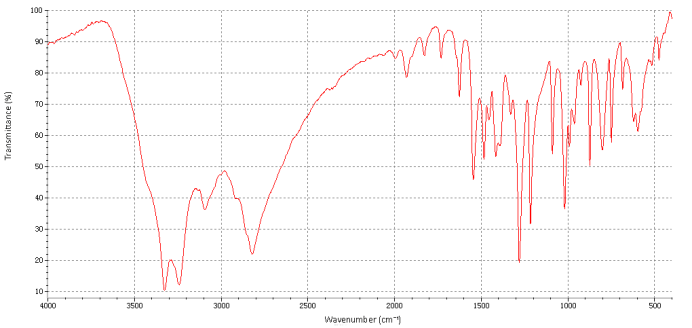 |
Figure 2 FTIR Spectrum of Vitamin B6 by Potassium Bromide Pellet Method |
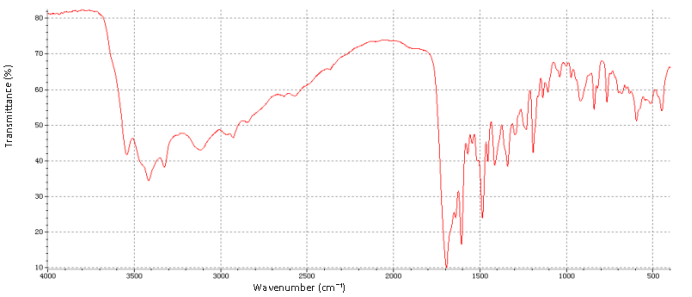 |
Figure 3 FTIR Spectrum of Folic Acid by Potassium Bromide Pellet Method |
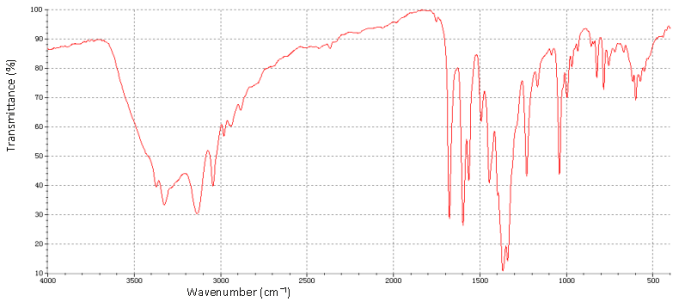 |
| Figure 4 FTIR Spectrum of Thiamine Nitrate by Potassium Bromide Pellet Method |
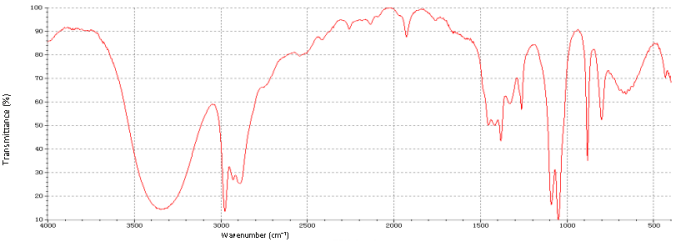 |
Figure 5 FTIR Spectrum of Ethanol Obtained by Fixed Liquid Cell Method |
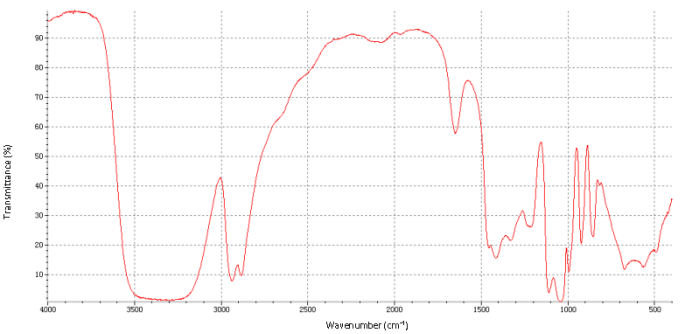 |
Figure 6 FTIR Spectrum of Glycerol Obtained by Demountable Liquid Cell Method |
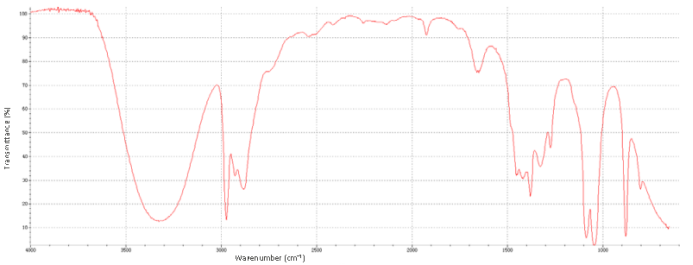 |
Figure 7 ATR Spectrum of Ethanol |
Conclusion
The pharmaceutical samples were analyzed using the HKL-FTIR Spectrometer for Pharmaceutical and Chemical Testing. The test results demonstrate that infrared spectroscopy can effectively identify the component types of pharmaceuticals, with the advantages of being simple, accurate, and reliable, fully meeting the testing requirements.